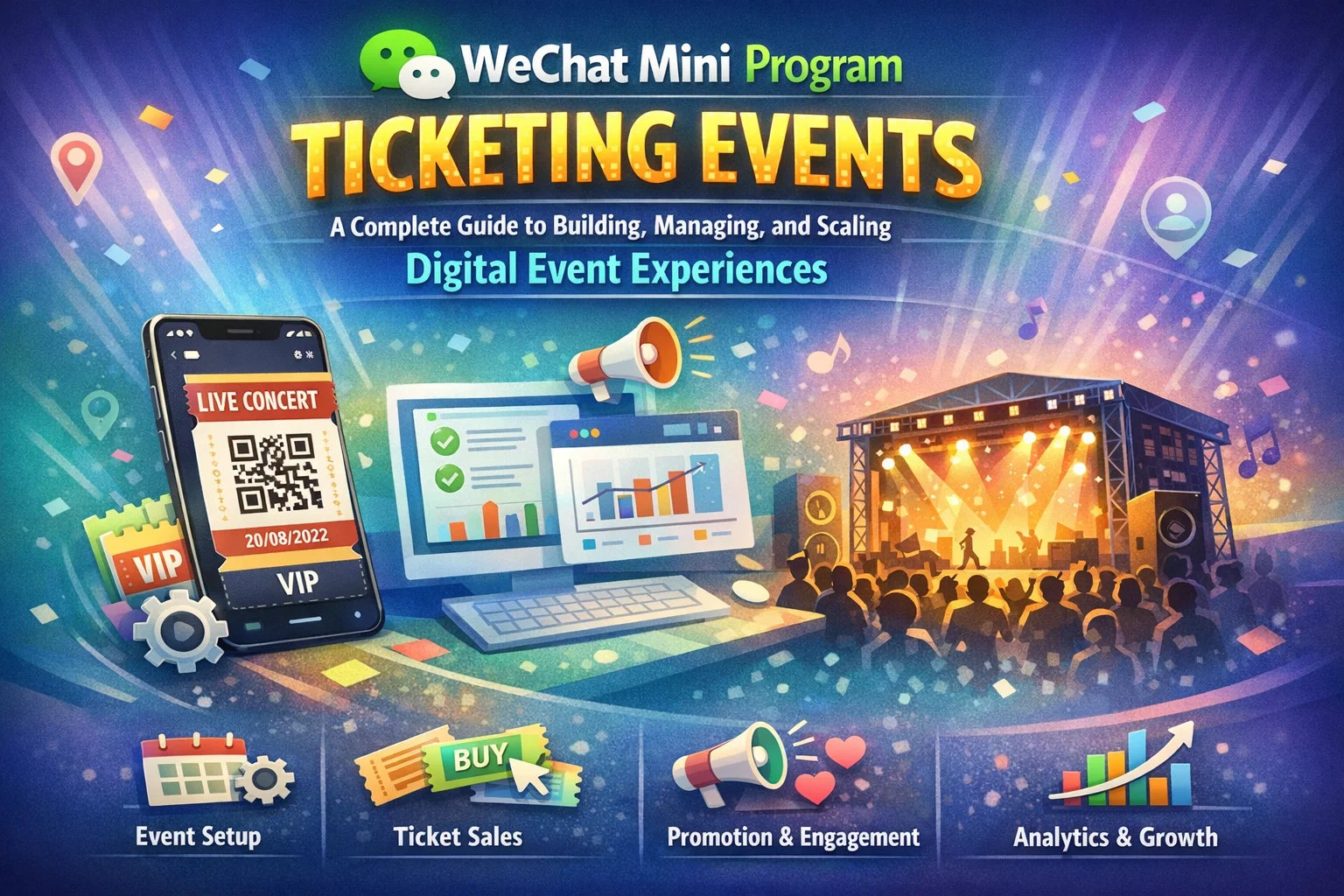
The way people discover, book, and attend events has changed dramatically in recent years, especially in markets where mobile-first behavior is the norm. In China and across regions influenced by its digital ecosystem, WeChat has evolved into far more than a messaging app. It is a payment tool, a marketing platform, a customer service channel, and increasingly, a full-scale event infrastructure. At the center of this evolution is the rise of wechat mini program ticketing events, which allow organizers to manage everything from promotion to entry scanning without forcing users to leave WeChat.
This article explores the entire ecosystem behind event ticketing inside WeChat Mini Programs. It breaks down how the technology works, why it matters, and how brands, venues, and independent organizers use it to deliver smoother experiences and higher conversion rates. The focus is practical, strategic, and grounded in real-world use cases, making it useful for decision-makers, marketers, developers, and event professionals alike.
WeChat Mini Programs remove friction at every step of the event journey. Users do not download separate apps, create new accounts, or re-enter payment details. They discover an event, purchase a ticket, receive a QR code, and enter the venue, all within the same familiar interface. For organizers, this creates a rare combination of reach, data visibility, and operational control that traditional ticketing platforms struggle to match.
As one event operations director in Shanghai once put it, “When your ticketing lives inside WeChat, you are not competing for attention. You are already where your audience lives.” That idea captures why this model has grown so fast and why it continues to shape the future of digital event management.
Understanding the WeChat Mini Program Ecosystem
WeChat Mini Programs are lightweight applications that run inside WeChat itself. They do not require installation from an app store, and they open instantly when accessed via a link, QR code, or search. For users, they feel like native apps. For businesses, they act as powerful micro-platforms tightly integrated with WeChat’s core features.
In the context of event management, this ecosystem matters because it combines messaging, social sharing, payments, and identity into a single flow. When someone buys a ticket through a Mini Program, the system already knows who they are, how they pay, and how they share content with friends. That reduces friction and increases trust.
Mini Programs also benefit from WeChat’s massive daily active user base. Events promoted through official accounts, group chats, or Moments can link directly to ticket purchase pages without breaking the user experience. This is a major reason why wechat mini program ticketing events outperform many external ticketing sites in conversion rates.
From a technical standpoint, Mini Programs use a standardized framework provided by Tencent. This ensures consistent performance, strong security, and native access to features like WeChat Pay, QR code generation, location services, and push notifications. For ticketing, these features are not optional extras; they are foundational building blocks.
Why Event Ticketing Inside WeChat Matters
Traditional ticketing platforms often force users through a long chain of steps. They must leave a social platform, load a website, create an account, confirm email addresses, and then complete payment. Every step introduces drop-off risk.
WeChat-based ticketing collapses that funnel. A user can move from discovery to purchase in seconds. This is especially important for impulse-driven events such as concerts, pop-ups, workshops, and nightlife experiences, where timing and emotion play a huge role.
Another major advantage is trust. WeChat Pay is deeply embedded in everyday life, and users are comfortable authorizing payments inside the app. That familiarity translates directly into higher purchase confidence, especially for smaller or newer event brands.
Organizers also gain stronger data visibility. Because tickets are tied to WeChat user IDs, it becomes easier to track repeat attendance, segment audiences, and personalize communication. Instead of anonymous ticket buyers, organizers build long-term relationships.
For many businesses, wechat mini program ticketing events are not just a sales tool. They are a customer relationship channel that extends before, during, and after the event itself.
Core Components of a Ticketing Mini Program
A successful ticketing Mini Program is more than a checkout page. It is a structured system with multiple interconnected components working together seamlessly.
At the front end, users see event listings, detailed descriptions, schedules, venue information, and pricing tiers. Visual clarity and speed matter here, as users expect instant loading and intuitive navigation.
The purchase flow integrates WeChat Pay for instant transactions. This includes support for discounts, promo codes, group pricing, and early-bird offers. Payment confirmation happens in real time, and tickets are issued immediately.
Ticket delivery usually takes the form of dynamic QR codes stored inside the Mini Program. These codes can refresh periodically to prevent fraud and are scanned at the venue entrance using staff-side Mini Programs or scanning devices.
On the backend, organizers manage inventory, track sales, monitor check-ins, and access analytics dashboards. These tools provide insight into sales velocity, attendance rates, and user behavior patterns.
Customer communication is another critical component. Automated messages confirm purchases, send reminders, and deliver last-minute updates. Because these messages appear inside WeChat, open rates are significantly higher than email.
Types of Events That Benefit Most
While almost any event can use WeChat-based ticketing, certain categories see especially strong results.
Concerts and live performances benefit from rapid sharing and group buying behavior. Fans often forward event links to friends, creating organic viral loops inside WeChat chats.
Conferences and exhibitions use Mini Programs to manage complex schedules, multi-day passes, and exhibitor access. Attendees appreciate having everything, from tickets to session agendas, in one place.
Workshops, classes, and training sessions rely on reminders and follow-up communication. Mini Programs excel here by keeping participants engaged before and after the event.
Pop-up events and brand activations take advantage of QR-code-based discovery. A single poster or flyer can link directly to a ticketing flow without requiring a website visit.
Across all these formats, wechat mini program ticketing events shine because they align with how people already plan, share, and attend experiences in their daily digital lives.
Comparing WeChat Ticketing With Traditional Platforms
Understanding the difference between WeChat-based ticketing and traditional platforms helps clarify why adoption continues to grow.
Traditional ticketing sites often operate as standalone marketplaces. They focus on aggregation, listing thousands of events and charging service fees. While this model offers exposure, it limits branding and data ownership.
WeChat Mini Programs, by contrast, are brand-controlled environments. The organizer owns the interface, the user relationship, and the communication channel. There is no competing event list distracting the buyer.
The table below highlights some of the most important differences.
| Aspect | Traditional Ticketing Platforms | WeChat Mini Program Ticketing |
|---|---|---|
| User Experience | External websites or apps | Native experience inside WeChat |
| Account Creation | Often required | Not required |
| Payment Method | Multiple gateways | WeChat Pay integrated |
| Branding Control | Limited | Full control |
| Data Ownership | Platform-owned | Organizer-owned |
| Sharing & Virality | External links | Native social sharing |
| Entry Management | Often separate tools | QR scanning inside Mini Programs |
This structural difference explains why many organizers shift their focus toward wechat mini program ticketing events once they understand the long-term benefits.
The Role of Social Sharing and Virality
One of the most underestimated strengths of WeChat ticketing is social distribution. Events do not need massive ad budgets to reach the right audience. Instead, they rely on peer-to-peer sharing.
When a user shares an event link in a group chat, it carries social proof. Friends trust recommendations from people they know more than from ads. This effect compounds quickly, especially in interest-based communities.
Mini Programs are designed to encourage this behavior. Share buttons are prominent, previews are clean, and links open instantly. There is no friction that might discourage sharing.
Organizers can also design incentives around sharing, such as group discounts or referral bonuses. These tactics work particularly well inside WeChat because tracking referrals is straightforward and transparent.
As a marketing strategist once noted, “WeChat turns every ticket buyer into a potential distributor.” That dynamic is central to the success of wechat mini program ticketing events.
Payment, Security, and Trust Factors
Security is a major concern for both users and organizers. WeChat’s infrastructure provides a strong foundation that addresses many common risks.
WeChat Pay uses industry-standard encryption and fraud detection systems. Users authenticate payments with biometric or password confirmation, which reduces unauthorized transactions.
Tickets issued through Mini Programs are typically tied to unique user identifiers. This makes duplication and resale more difficult. Dynamic QR codes add an extra layer of protection by expiring or refreshing after use.
Refunds and cancellations can also be handled inside the same system. This transparency builds trust and reduces customer service disputes.
For international organizers entering the Chinese market, these trust signals are especially important. Local users are far more comfortable purchasing tickets through familiar WeChat flows than through foreign websites.
Entry Management and On-Site Operations
The on-site experience is where ticketing systems either prove their value or reveal their weaknesses. WeChat Mini Programs offer a streamlined approach to entry management.
Staff can use dedicated scanning Mini Programs to check tickets at the entrance. Scans are validated in real time against the backend system, reducing the risk of duplicate entries.
Attendance data updates instantly, giving organizers a live view of how many people have arrived. This information helps with crowd control, staffing decisions, and safety management.
Some events integrate additional features such as badge printing, session check-ins, or access control for VIP areas. All of this can be managed within the same Mini Program ecosystem.
For large-scale wechat mini program ticketing events, these operational efficiencies translate into smoother entry flows and better overall attendee satisfaction.
Data, Analytics, and Long-Term Value
Ticket sales are only one part of the value equation. The real long-term advantage lies in data and insights.
Mini Programs allow organizers to track the full user journey, from discovery source to purchase time to check-in behavior. This data supports smarter decision-making for future events.
Organizers can identify which marketing channels drive the highest-quality attendees, which pricing tiers convert best, and which segments are most likely to return.
Because users are tied to persistent WeChat IDs, it becomes easier to build loyalty programs, offer early access to repeat attendees, and personalize communication.
Over time, wechat mini program ticketing events become part of a broader ecosystem where each event strengthens the next through accumulated data and relationships.
Monetization Beyond Ticket Sales
While ticket revenue is the primary focus, Mini Programs open the door to additional monetization strategies.
Merchandise sales can be integrated directly into the same Mini Program. Attendees can purchase items before, during, or after the event without leaving the platform.
Sponsored content and brand partnerships can be embedded in event pages, schedules, or post-event communications. Because the environment is controlled, these integrations feel more native and less intrusive.
Some organizers offer premium digital content, such as recorded sessions or exclusive community access, as add-ons during the ticket purchase process.
These layered revenue streams are easier to manage when everything lives inside a unified system, reinforcing the business case for wechat mini program ticketing events.
Regulatory and Compliance Considerations
Operating inside WeChat also means aligning with local regulations and platform policies. This is particularly relevant for events involving payments, personal data, or cross-border transactions.
Mini Programs must comply with Tencent’s guidelines, which cover content standards, data handling, and user protection. While this adds an extra layer of oversight, it also reassures users.
Event organizers are responsible for providing clear terms, refund policies, and customer support channels. Transparency is key to maintaining trust and avoiding disputes.
For international brands, working with local partners or experienced developers can help navigate these requirements smoothly and avoid costly mistakes.
Case Examples From the Real World
Across industries, real-world examples illustrate how this model works in practice.
A mid-sized music festival in southern China replaced its third-party ticketing platform with a custom Mini Program. Within one year, ticket conversion rates increased significantly, and marketing costs dropped due to organic sharing.
A professional conference used a Mini Program to manage multi-day passes, session check-ins, and exhibitor interactions. Attendees reported higher satisfaction because all information was accessible in one place.
A fashion brand launched a pop-up event with limited-capacity tickets released via WeChat. The event sold out within minutes, driven largely by group chat sharing and Moments exposure.
These stories highlight the adaptability of wechat mini program ticketing events across different formats and audiences.
Challenges and Limitations
Despite its strengths, this approach is not without challenges. Development costs can be higher upfront compared to using an existing ticketing marketplace.
Organizers must also invest in ongoing maintenance, updates, and compliance checks. A poorly designed Mini Program can frustrate users just as easily as a slow website.
Another limitation is geographic focus. While WeChat dominates in China, its adoption varies elsewhere. Events targeting global audiences may need hybrid strategies.
Understanding these limitations helps set realistic expectations and ensures that wechat mini program ticketing events are implemented strategically rather than impulsively.
Best Practices for Long-Term Success
Sustainable success depends on more than just launching a Mini Program. It requires thoughtful design, consistent communication, and ongoing optimization.
User experience should always come first. Pages must load quickly, navigation should be intuitive, and information should be clear and concise.
Marketing efforts should integrate organically with WeChat’s social features rather than relying solely on paid promotion.
Data should be reviewed regularly to identify trends and opportunities for improvement. Small adjustments in pricing, messaging, or timing can produce significant gains over time.
Above all, organizers should view their Mini Program as a long-term asset rather than a one-off tool. This mindset unlocks the full potential of wechat mini program ticketing events.
The Future of Event Ticketing in WeChat
Looking ahead, the role of Mini Programs in event management is likely to expand even further. As WeChat continues to enhance its platform, new features will create additional opportunities.
Deeper integration with location services, loyalty programs, and digital content will blur the line between online and offline experiences.
For organizers willing to invest in this ecosystem, the payoff is not just higher ticket sales, but stronger brand communities and more resilient business models.
Conclusion
Event ticketing is no longer just about selling access. It is about creating seamless, engaging, and trustworthy experiences from the first moment of discovery to long after the event ends. WeChat mini program ticketing events represent a powerful evolution in how this process works, especially in mobile-first, socially connected markets.
By combining payment, promotion, data, and communication into a single environment, Mini Programs reduce friction and increase value for both users and organizers. They shift ticketing from a transactional function to a strategic platform for growth.
For events of all sizes, understanding and leveraging this model is becoming less of an option and more of a competitive necessity.
FAQ
What makes WeChat Mini Programs suitable for event ticketing?
WeChat Mini Programs are suitable for event ticketing because they integrate discovery, payment, and access control into a single environment. This reduces friction and increases trust, which is why wechat mini program ticketing events perform well.
Can small events benefit from WeChat-based ticketing?
Small events benefit significantly because they gain access to powerful social sharing and payment tools without needing to build or promote standalone apps. This levels the playing field in a competitive market.
How secure are tickets issued through Mini Programs?
Tickets issued through Mini Programs are generally secure due to WeChat Pay integration and dynamic QR code validation. These features help prevent fraud and unauthorized entry at events.
Is it possible to manage on-site check-ins with a Mini Program?
On-site check-ins are commonly managed with dedicated scanning Mini Programs. Staff can validate tickets in real time, making entry faster and more reliable for attendees.
Do WeChat Mini Program ticketing systems support data analysis?
Most systems include dashboards that track sales, attendance, and user behavior. This data helps organizers improve future wechat mini program ticketing events and build long-term relationships with attendees.