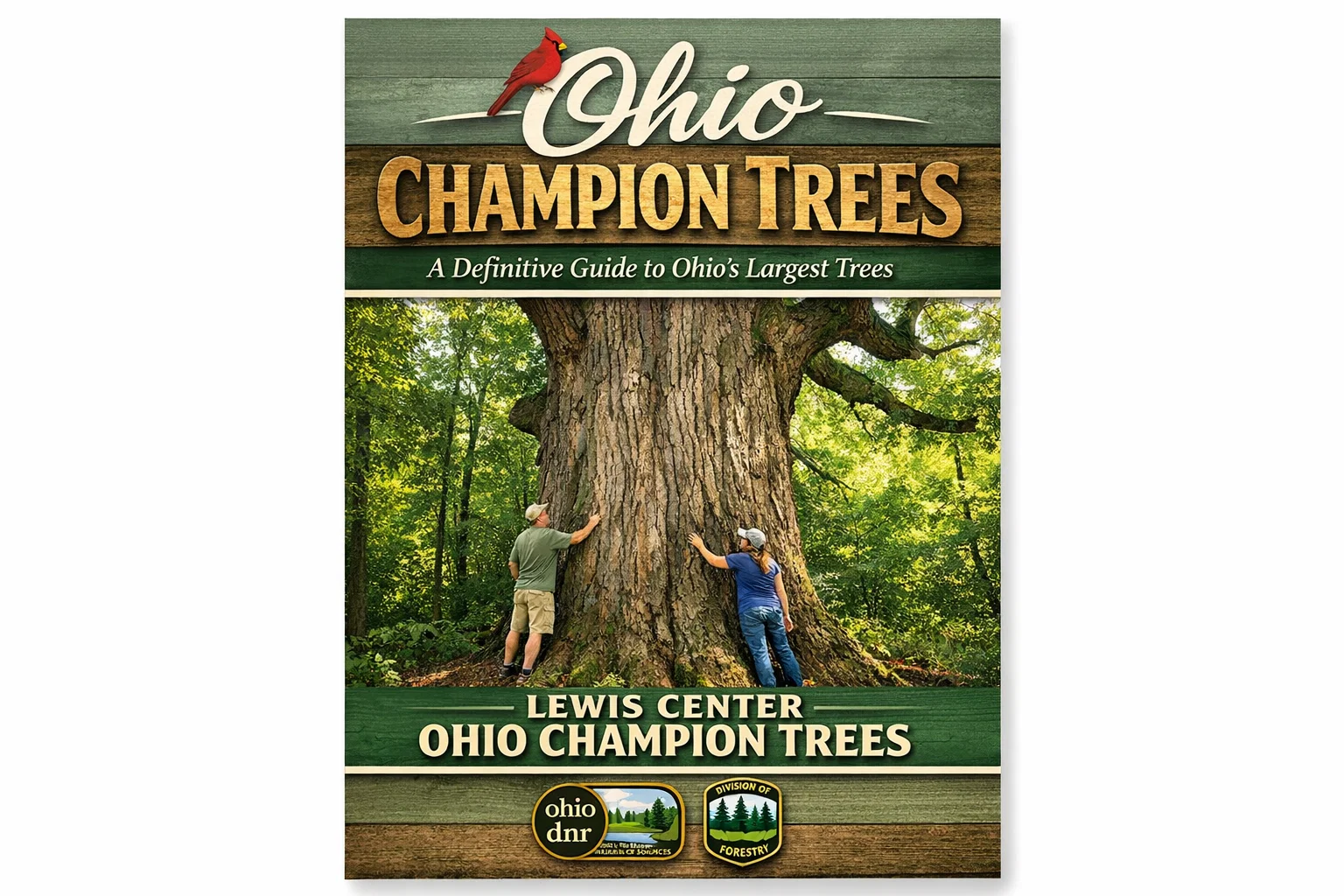
The Crowned Giants: Unveiling Ohio’s Champion Trees, from Lewis Center to Every Corner of the State
Imagine standing in the shadow of a living monument—a white oak so vast its limbs cradle the history of centuries, or a sycamore whose trunk forms a silent, cathedral-like space. This is the profound experience offered by Ohio’s Champion Trees, a program dedicated to finding, measuring, and celebrating the largest specimens of their kind within the state. These trees are not merely plants; they are record-holders, ecological anchors, and storytellers of Ohio’s natural and cultural heritage. The program, part of a national network, ignites a friendly competition among communities and landowners, fostering a deep appreciation for our arboreal elders. From the notable Ohio Champion Trees Lewis Center Ohio Champion Trees enthusiasts seek out, to hidden giants in rural woodlots, this journey into the canopy reveals a state far richer in natural wonder than many realize. This comprehensive guide will explore everything from the science of champion tree hunting to the specific stories of these leafy titans, offering you the knowledge to appreciate, locate, and perhaps even help protect these irreplaceable treasures.
Understanding the Champion Tree Program
The Champion Tree program is a nationwide effort, coordinated by American Forests, with state-level chapters like Ohio’s diligently managed by the Ohio Department of Natural Resources (ODNR) Division of Forestry. Its core mission is simple yet powerful: to locate, verify, and recognize the largest living specimens of every native and naturalized tree species in the state. This isn’t just about bragging rights; it’s a conservation tool. By drawing public attention to these monumental trees, the program highlights the importance of mature forest ecosystems, biodiversity, and the preservation of genetic legacy.
The process of crowning a champion is a precise science. Trees are scored not solely on height or girth, but on a combination of three measurements: trunk circumference in inches (measured at 4.5 feet above ground), total height in feet, and the average crown spread in feet. These figures are plugged into a formula: Total Points = Circumference + Height + (1/4 of Average Crown Spread). The tree with the highest composite score for its species earns the champion title. This systematic approach ensures a fair competition, whether comparing a massive bur oak in a park or a towering tulip poplar in a private forest.
The Historical Roots of Ohio’s Arboreal Records
Ohio’s fascination with champion trees runs deep, intertwined with the state’s own development from a vast, old-growth wilderness to a modern agricultural and industrial hub. Early settlers and surveyors often noted “wolf trees” or boundary trees—exceptionally large individuals used as landmarks. The formalization of a champion tree program in Ohio, however, is a more recent endeavor, gaining significant momentum in the latter half of the 20th century as awareness of environmental stewardship grew. This systemized cataloging creates a living historical record, a dendrological archive that speaks to pre-settlement conditions and ecological resilience.
The historical context makes finding a champion tree especially meaningful. A champion sugar maple may have been a “sugar bush” for a pioneer family. A champion black walnut may mark the former site of a homestead, its valuable timber spared for future generations. Each tree’s longevity is a testament to surviving the axes of clearing, the winds of storms, and the pressures of development. They are biological antiquities, and their continued existence allows us a tangible connection to Ohio’s primordial landscape, offering invaluable insights into the age, growth patterns, and climatic history of our region.
The Science of Measuring a Giant
Accurately measuring a potential champion is a task that blends forestry skill with a touch of arborist artistry. The circumference is the most straightforward, using a simple flexible tape measure at the standard “diameter at breast height” (DBH) point. Height, however, requires more sophisticated tools. Today, foresters primarily use laser rangefinders, or clinometers, which use trigonometry to calculate height based on distance from the tree and the angle to its top. This must be done from multiple angles to find the true apex, especially in a crowded forest.
Crown spread measurement is a dance of geometry and estimation. It involves finding the widest spread of the branches from one edge of the drip line to the other, and then measuring a perpendicular spread to get an average. This is often done with a long measuring tape or by pacing. The meticulous nature of this work is crucial, as inches in circumference or feet in height can determine a championship. It ensures the integrity of the program and provides a consistent dataset for monitoring the tree’s health and growth over subsequent decades.
Notable Ohio Champion Trees Beyond Lewis Center
While the search for Ohio Champion Trees Lewis Center Ohio Champion Trees points leads to specific local wonders, the state’s roster of champions is dazzling in its diversity and geographic spread. Southwestern Ohio boasts the immense “Hutchinson Sycamore” near Bellefontaine, a tree of such staggering girth it feels like a natural monument. In the northeastern part of the state, a colossal Eastern Cottonwood presides over a landscape, its towering form a landmark from miles away. Each region, from the Appalachian foothills to the Lake Erie plains, holds its own arboreal royalty, adapted to local soils and microclimates.
The stories behind these trees are as varied as their species. Some champions, like the massive White Oak in Geauga County, stand solitary in farm fields, survivors of the great forest clearing. Others, like the record-holding Shagbark Hickory in Hocking Hills, thrive deep within protected state forests. There are even champions in urban cemeteries, on college campuses, and in humble suburban backyards. This distribution underscores a powerful truth: champion trees can be anywhere. Their survival often hinges on a combination of luck, purposeful preservation by a landowner, or their location in a protected space, offering a lesson in stewardship that touches every corner of Ohio.
Elizabeth Rizzini: The Story Behind the Esteemed ITV Weather Presenter and Broadcaster
The Ecological Role of Mature and Champion Trees
A champion tree is far more than a record-holder; it is a powerhouse ecosystem unto itself. Its immense size translates directly to immense ecological value. The vast canopy of a mature oak or beech intercepts thousands of gallons of stormwater, reduces urban heat island effect, and sequesters carbon at a rate far exceeding that of younger trees. Its deep, extensive root system stabilizes soil, prevents erosion, and creates channels for water infiltration, benefiting the entire watershed. These are the climate-regulating, life-support functions of old-growth characteristics, even in a single, isolated specimen.
Furthermore, these arboreal giants provide critical habitat. Their complex bark, large trunk cavities, massive dead limbs (snags), and sprawling root structures offer nesting sites, dens, foraging grounds, and shelter for countless species of birds, mammals, insects, and fungi. A single champion tree may host more biodiversity than an acre of young forest. They are keystone structures, and their loss represents not just the loss of a tree, but the collapse of a miniature world. Protecting champion trees is, therefore, a direct investment in local biodiversity and ecological resilience.
How to Nominate a Potential Champion Tree
The hunt for a champion tree is an exciting endeavor open to every Ohioan. It begins with observation. If you see a tree that seems unusually large for its species, you can cross-reference it with the current Ohio Big Tree Register available on the ODNR website. Compare your visual estimate with the listed champion’s dimensions. If you believe your tree could contend, the next step is to take preliminary measurements. Carefully follow the guidelines for circumference, and make your best estimates for height and crown spread using tools as simple as a tape measure and a smartphone app with a clinometer function.
If your initial numbers suggest a potential winner, you can submit a nomination form to the ODNR Division of Forestry. Provide the tree’s species (if known), location, landowner contact information, and your measurements. A state forester or volunteer verifier will then schedule a visit to take official measurements using professional-grade tools. This collaborative process between the public and professionals is the lifeblood of the program, continually updating and refining the register. It turns everyday citizens into citizen scientists and conservation advocates.
Conservation Challenges for Ancient Trees
Despite their size and stature, champion trees face a myriad of modern threats. Development pressure remains a constant risk, especially for trees on private land not protected by conservation easements. Soil compaction from construction or heavy foot traffic, grade changes that affect water drainage, and pollution can severely stress a tree’s root system, often leading to a slow decline. Furthermore, the pests and diseases that plague Ohio’s forests—such as the Emerald Ash Borer, Oak Wilt, or the invasive Spotted Lanternfly—do not discriminate by size; a 300-year-old ash is as vulnerable as a sapling.
Climate change introduces another layer of stress through increased temperatures, altered precipitation patterns, and more frequent severe weather events. A historic drought or an unprecedented windstorm can topple a giant that has weathered centuries of typical storms. The conservation of these trees, therefore, requires proactive management. This can include regular health assessments by a certified arborist, installing protective fencing to limit root zone disturbance, treating for specific pests when possible, and, most importantly, educating current and future landowners about the irreplaceable value of the living legacy in their care.
The Cultural and Community Value of Champion Trees
Champion trees often become beloved landmarks, weaving themselves into the fabric of community identity. They are the “old oak” where generations have gathered for photos, the towering elm that marks the town square, or the legendary beech with carved initials dating back to the Civil War. These trees serve as living history books, their growth rings encoding the passage of time in a way a plaque or building cannot. They inspire local art, folklore, and pride, creating a shared sense of place and continuity in a rapidly changing world.
Communities often leverage their champion trees for educational and economic benefit. A notable champion can become the centerpiece of a park, a destination on a driving tour, or the focus of a local festival. Schools use them for outdoor science lessons about biology, ecology, and measurement. This communal value transforms the tree from a private asset into a public treasure, galvanizing local support for its protection. The act of seeking out Ohio Champion Trees Lewis Center Ohio Champion Trees and others across the state is, in part, a pilgrimage to connect with these silent, stalwart witnesses to our shared history.
Visiting Champion Trees: Ethics and Etiquette
Seeking out and visiting champion trees is a rewarding pursuit, but it must be done with the utmost respect for the tree and its surroundings. The first and most critical rule is to always secure permission before accessing a tree on private property. The ODNR register often lists trees with generic locations (e.g., “Private Residence, Delaware County”) to protect them. Do not trespass. For trees on public land, stay on designated trails to avoid compacting the critical root zone, which can extend far beyond the drip line of the branches.
When you do visit, practice “Leave No Trace” principles. Do not carve into the bark, hammer in nails, or leave behind any trash. Avoid excessive foot traffic around the base, and never park vehicles or set up heavy equipment near the roots. Observe the tree from a distance that allows you to appreciate its full form. The goal is to ensure your visit causes no harm, allowing the tree to continue its growth undisturbed for future generations of admirers. As one longtime champion tree verifier notes, “We are merely temporary stewards of these ancient beings. Our role is to appreciate, measure, and protect them, not to impose our presence upon them.”
The Future of Ohio’s Champion Tree Program
The future of the champion tree program hinges on continued public engagement and the integration of new technologies. Citizen science will remain vital, but tools like LiDAR (Light Detection and Ranging) aerial surveys and advanced drone photography are beginning to help researchers identify potential candidate trees from above, especially in dense or remote forests. These technologies can map canopy height and volume, pointing investigators toward anomalies worthy of ground-truthing. This fusion of traditional forestry and cutting-edge tech will likely expand the register in coming years.
Perhaps the most important evolution is the growing emphasis on the “champion tree of tomorrow.” Programs encouraging the planting of native species with strong growth potential, especially in urban areas, are essential. While we care for the existing giants, we must also plant and nurture the successors that will take their place centuries from now. This long-term vision transforms the program from a static record of the past into a dynamic investment in the future canopy of Ohio, ensuring that the legacy of towering trees continues far beyond our own lifetimes.
Table: A Comparison of Notable Ohio Champion Tree Species
| Tree Species | Approx. Height (ft) | Approx. Circumference (ft) | Notable Location & Context |
|---|---|---|---|
| Eastern Sycamore | 130+ | 40+ | Often found along riverbanks; the Hutchinson Sycamore is a legendary example. |
| White Oak | 90-120 | 25-35 | Frequent champion; symbolizes strength; often found in open fields as a survivor tree. |
| Tulip Poplar | 150+ | 20-30 | One of Ohio’s tallest native trees; fast-growing; important for pollinators. |
| Shagbark Hickory | 80-100 | 15-25 | Distinctive bark; prized for its nuts; champions often in mature, undisturbed forests. |
| Eastern Cottonwood | 140+ | 30+ | Massive, fast-growing riparian species; common champions in floodplains. |
| American Beech | 80-100 | 20-28 | Smooth gray bark; holds leaves in winter; susceptible to beech leaf disease. |
| Black Walnut | 100-130 | 20-30 | Highly valuable timber; champions often spared on old farmsteads. |
| Sugar Maple | 80-110 | 20-30 | Source of maple syrup; brilliant fall color; champions can be centuries-old “sugar bushes.” |
Conclusion
The pursuit of Ohio Champion Trees Lewis Center Ohio Champion Trees and their peers across the state is much more than a checklist of big plants. It is an invitation to look up, to marvel, and to connect with the living history beneath our feet and over our heads. These arboreal champions are our biological heritage, ecological sanctuaries, and communal landmarks. They remind us of a scale of time that dwarfs human concerns and of a natural world capable of profound majesty. By seeking them out, nominating new candidates, and advocating for their protection, we participate in a vital tradition of stewardship. We ensure that the quiet, enduring presence of these giants continues to inspire awe, provide sanctuary for wildlife, and tell the story of Ohio’s land for generations yet to come. Let this guide be your starting point for a journey into Ohio’s magnificent canopy.
Frequently Asked Questions (FAQ)
What exactly are the Ohio Champion Trees Lewis Center Ohio Champion Trees?
The phrase Ohio Champion Trees Lewis Center Ohio Champion Trees refers to the search for state-record holding trees specifically within or near the Lewis Center, Ohio area. Lewis Center, located in Delaware County, may be home to several champion or contender trees. The Ohio Champion Tree program is a statewide registry managed by the ODNR to identify the largest known specimen of each native tree species, and enthusiasts often search by region to locate these natural wonders close to home.
How often is the Ohio Big Tree Register updated?
The Ohio Big Tree Register is a living document that is updated continuously as new nominations are verified and older champions are dethroned or lost. The ODNR Division of Forestry reviews submissions regularly. A tree may lose its champion status due to storm damage, disease, or, most positively, because a larger specimen of that species is discovered and officially measured, highlighting the dynamic and competitive nature of the program.
Can a tree on my private property become a champion?
Absolutely. Many Ohio Champion Trees are located on private residential, farm, or business properties. Landowners often take great pride in hosting a state champion. If you have a remarkably large tree, you can follow the nomination process. If verified as a champion, you would be recognized as the tree’s steward, and its location would typically be listed generically (e.g., “Private Residence, County Name”) on the public register to protect your privacy while celebrating the tree’s status.
What happens if a champion tree dies or falls?
When a champion tree dies or is removed, it is officially retired from the active register and moved to a historical list of past champions. This commemorates its legacy. The search then begins anew for the next largest living specimen of that species to inherit the title. This cycle underscores the importance of both preserving existing giants and identifying potential successors, ensuring the continuity of the champion lineage for every tree species in Ohio.
Are there any educational programs about champion trees?
Yes, numerous educational opportunities exist. The ODNR and local soil and water conservation districts often host workshops on tree identification, measurement, and conservation. Many champions located in parks or nature preserves have informational plaques. Schools and scout groups frequently use local champion trees as outdoor classrooms for lessons in biology, math, and local history, making them fantastic resources for hands-on learning about ecology and stewardship.