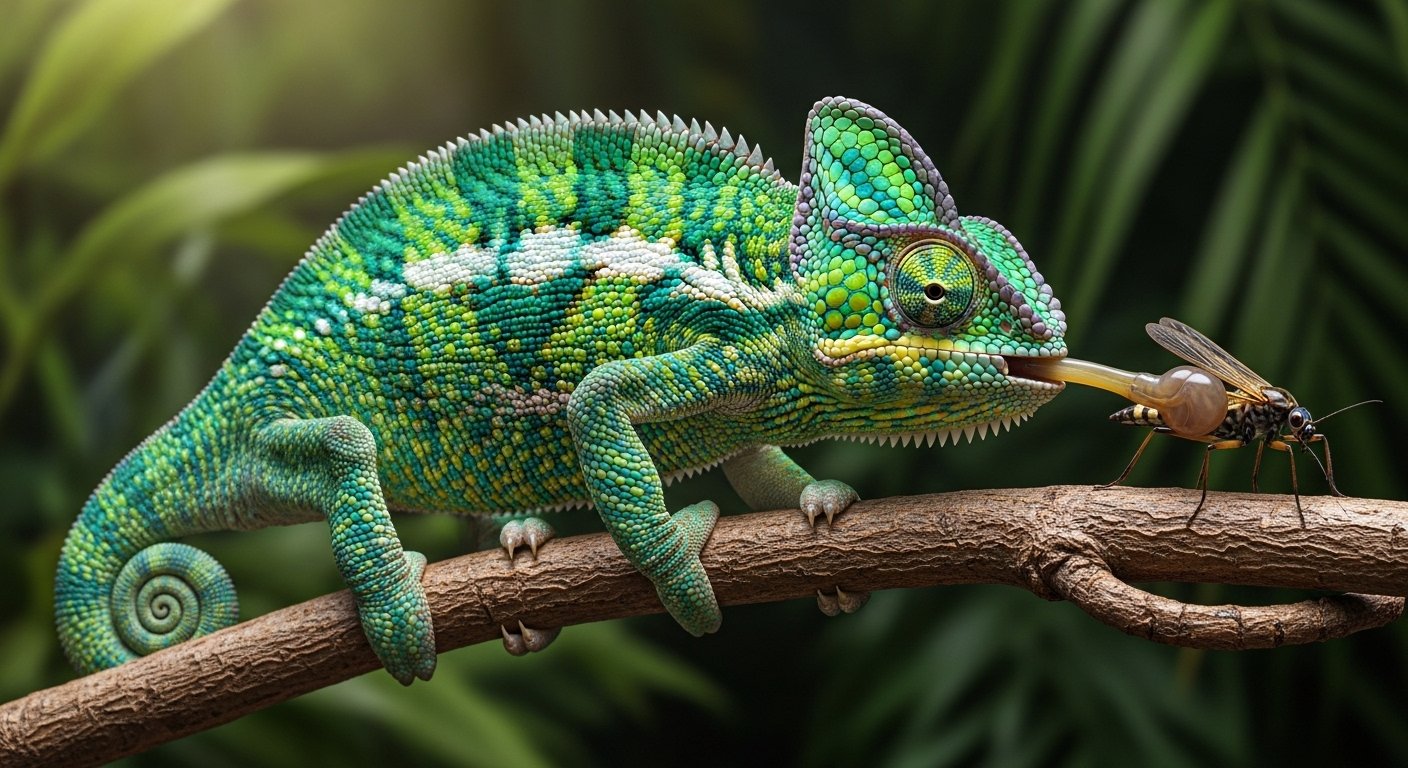
Chamaeleonidae are one of the most captivating groups of reptiles, admired for their ability to change colors, their flexible tongues, and their uniquely mobile eyes. These lizards are primarily found in the tropical regions of Africa, Madagascar, and Asia, but their popularity as exotic pets has been rising in Europe and America. Their unique physiological and behavioral adaptations make them some of the most remarkable creatures on our planet.
Chamaeleonidae are characterized by specialized morphology that allows them not only to change color for communication or camouflage but also to move their eyes independently. These abilities are the result of millions of years of evolution and give them a significant advantage when hunting insects, defending against predators, and interacting socially. Their diversity is astounding—from tiny species to large ones exceeding half a meter in length.
Chamaeleonidae are fascinating not only to scientists but also to nature enthusiasts. “Every chameleon is a master of surprise, showing that nature can be both beautiful and clever,” said renowned herpetologist Dr. Jean-Luc Fournier. Studying them provides valuable insights into adaptation, evolution, and tropical ecology.
Evolutionary History of Chamaeleonidae
Chamaeleonidae belong to the family Chamaeleonidae, with a history stretching back millions of years. Fossil records indicate that their ancestors inhabited tropical forests as far back as the Eocene, around 40–50 million years ago. The evolution of these lizards was driven by the need to survive in dense forests, where camouflage and distance hunting were vital for survival.
The adaptations of chameleons are the result of complex evolutionary processes. Their ability to change colors, their eye structure, and their specialized tongue are examples of how form and function evolved to enhance survival. “Every feature a chameleon possesses is the product of careful selection, optimizing its ability to live in a variable environment,” explains Dr. Fournier.
Different species of chameleons evolved to occupy specific ecological niches. Some inhabit the upper tree canopy, while others stick to shrubs or grasses. This diversification has led to the recognition of over 200 species today.
Biology and Physiology of Chamaeleonidae
Chamaeleonidae are best known for their color-changing ability, but their biology is far more complex. Their skin contains specialized chromatophores and iridophores, allowing rapid pigment changes. These colors are not just aesthetic; they signal mood, health status, and reproductive readiness.
Their eyes are another unique feature. Chameleons can move their eyes independently, providing almost 360-degree vision. This allows them to track both prey and predators simultaneously, increasing their hunting success. Their long, sticky tongue is another adaptation for efficient hunting, capable of extending up to twice the body length and striking with incredible speed.
Chameleons also have specially adapted limbs and toes. Their feet are designed for gripping branches and climbing, allowing safe movement through complex environments. Some species even have prehensile tails for extra stability.
Reproduction and Life Cycle
Chameleon reproduction is fascinating and diverse. Most species lay eggs, though some are live-bearing. Females carefully select nesting sites where the soil is moist and protected from predators. Incubation periods vary by species, ranging from 4 to 12 months.
Mating behavior is often dramatic and colorful. Males change color to attract females or intimidate rivals. “Watching a chameleon during mating season is like observing a living palette in motion,” says Dr. Fournier. Hatchlings are independent immediately, receiving little parental care.
Young chameleons grow rapidly in the first months, which is essential for survival, as they are especially vulnerable to predators and environmental challenges.
Diet and Hunting
Chameleons primarily eat insects, although larger species may consume small vertebrates. Their hunting relies on precise coordination between their eyes and tongue. The chameleon spots the prey and launches its sticky tongue with remarkable accuracy.
Some species have adapted to seasonal food fluctuations, changing behavior and color to conserve energy during lean periods. Their metabolism is efficient, allowing them to survive even under less ideal conditions.
Chameleons can also consume toxic insects without harm, giving them an ecological advantage and reducing food competition.
Habitat and Biotopes
Chamaeleonidae occupy diverse habitats, from dense rainforests to semi-arid areas. Each species has specific requirements for humidity, temperature, and vegetation. Tropical species need high humidity and dense foliage, while species from drier regions are more drought-resistant.
Because they primarily move through trees and shrubs, chameleons play a key ecological role as insect population regulators. Their presence often indicates a healthy ecosystem and biodiversity.
Threats such as pollution, deforestation, and the exotic pet trade endanger chameleons. Protecting their natural habitats is essential for biodiversity conservation.
Chamaeleonidae as Pets
Chameleons are increasingly popular as exotic pets, but they require specialized care. They need suitable enclosures with optimal humidity, temperature, and lighting. Proper diet and occasional human interaction are also essential for their well-being.
Many breeders stress that chameleons are not beginner pets. They require attention and patience, but observing their fascinating behavior and color changes provides a unique and rewarding experience.
Threats and Conservation
Many chameleon species face threats from habitat loss and illegal wildlife trade. Conservation organizations work to preserve natural habitats and regulate trade. Some species are protected under international agreements such as CITES.
Scientists and conservationists educate the public about the ecological importance of chameleons. “Protecting chameleons is protecting our forests and biodiversity,” emphasizes Dr. Fournier. Safeguarding these lizards is vital not only for nature but also for future generations of wildlife enthusiasts.
Interesting Facts and Myths
Chameleons are surrounded by myths. One common misconception is that they change color solely to match their environment. In reality, colors are primarily used for communication and signaling mood. Bright colors often indicate aggression or readiness to mate, while muted tones suggest calmness or stress.
Some species can live over 10 years in captivity, which is relatively long for reptiles. Chameleons also move in a unique, slow, deliberate manner, helping them remain unnoticed by predators.
Table: Comparison of Selected Chameleon Species
| Species | Body Length | Color Range | Habitat | Conservation Status |
|---|---|---|---|---|
| Panther Chameleon | 20–50 cm | Red, blue, green | Madagascar | Vulnerable |
| Jackson’s Chameleon | 20–38 cm | Green, yellow, blue | East Africa | Stable |
| Veiled Chameleon | 35–60 cm | Green, yellow, brown | Yemen, Saudi Arabia | Vulnerable |
| Pygmy Chameleon | 5–15 cm | Brown, green | Africa | Stable |
Reproduction and Social Behavior
Chameleons are largely territorial, and males often compete for space and mates. Social interactions involve colorful displays and gestures. Some species form temporary social bonds during mating seasons, though most are solitary.
Color communication is crucial for territory defense. Males intensify colors to deter rivals, while females use signals to indicate reproductive readiness. This fascinating signaling system makes chameleons unique among reptiles.
Captive Care Requirements
Caring for captive chameleons requires precise conditions. Ideal temperature and humidity, UVB lighting, and vegetation are essential for health. Incorrect conditions can lead to metabolic bone disease, dehydration, or stress-related issues.
Their diet should consist of vitamin- and mineral-enriched insects, with some species requiring occasional fruits or vegetables. Patience and careful observation are key, as each chameleon has unique temperament and needs.
Ecological Importance
Chameleons play a vital role in maintaining ecosystem balance. By regulating insect populations, they contribute to forest health and agricultural stability. Their presence is an ecological indicator, important for monitoring biodiversity.
Beyond ecological value, they hold cultural significance. In some communities, chameleons symbolize patience and adaptability. Studying them provides insights into reptilian behavior and strategies for conserving endangered species.
Future and Protection
The future of chameleons depends on preserving habitats and regulating wildlife trade. Public education, research, and international cooperation are crucial for their survival. Without these measures, many species could face serious threats soon.
Chameleons exemplify the intricate connection between evolution, adaptation, and ecology. Their survival relies not only on nature but also on humans recognizing their value and beauty.
Conclusion
Chamaeleonidae are an extraordinary group of reptiles, combining beauty, intelligence, and unique adaptations. Their ability to change color, capture prey with a long tongue, and move eyes independently makes them stand out in the animal kingdom. Protecting their habitats and understanding their behavior are essential for biodiversity conservation and for future generations to appreciate these remarkable creatures. Every chameleon is a tiny master of survival, reminding us how surprising and beautiful nature can be.
FAQ
What is the average lifespan of chameleons?
The lifespan of chameleons varies by species. Smaller species typically live 3–5 years, while larger species like the Veiled Chameleon can live up to 10 years in captivity. Longevity depends on proper conditions and care.
How do chameleons change color?
Chameleons change color using chromatophores and iridophores in their skin. Color changes serve communication, mood signaling, and reproductive readiness. Bright colors often indicate aggression or mating readiness.
What do chameleons eat?
Chameleons primarily eat insects such as crickets, flies, grasshoppers, and beetles. Larger species may consume small vertebrates. Their long, sticky tongue enables precise and efficient hunting.
Gailgreencatinchi: Complete Guide and Insights
What type of habitat do chameleons prefer?
Chameleons prefer habitats with sufficient vegetation, optimal humidity, and temperature. Tropical species require high humidity and tree canopies, while species from semi-arid regions are more drought-resistant.
What are the main threats to chameleons?
Major threats include habitat loss, deforestation, and illegal wildlife trade. Protecting natural habitats, educating the public, and regulating trade are key to their survival.