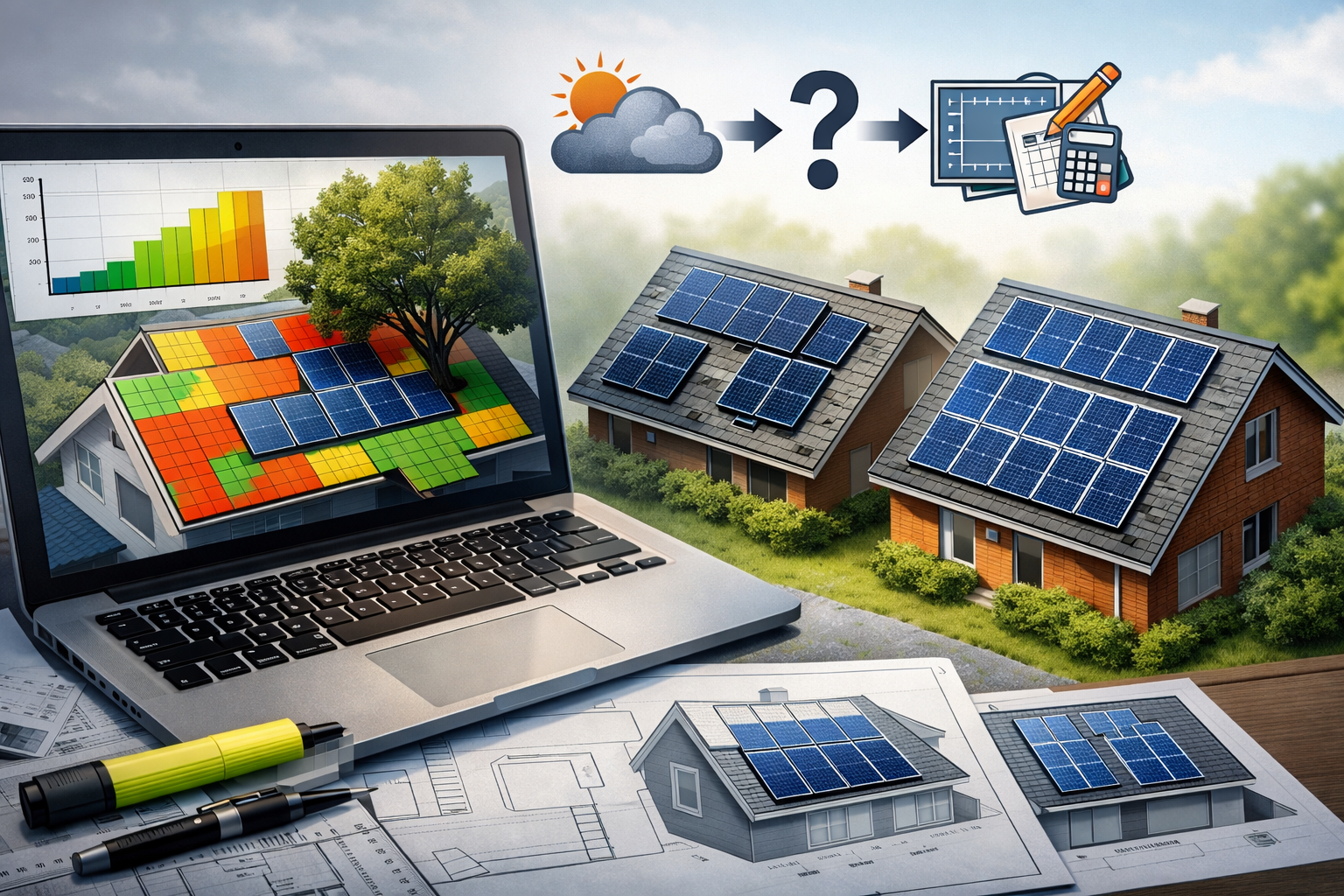
Shading analysis is the process of predicting when and where shadows will fall on a roof throughout the year, and it often changes a solar design more than the panel brand or equipment size. Even a small shadow from a vent pipe or a nearby tree can reduce output during key hours, especially when sunlight is already weaker in winter mornings and late afternoons. Homeowners sometimes judge a roof by how sunny it looks at noon, but shading analysis focuses on the entire day and every season because long shadows can quietly reduce production. By mapping shade patterns, designers can decide which roof planes are worth using, how many modules can fit in each zone, and whether it is smarter to spread panels across multiple faces rather than packing one area. This is how the layout becomes a performance plan, not just a placement exercise.
How Shade Shapes Layout
- What Shading Analysis Measures on Real Roofs
A proper shading review examines the sun’s path and compares it with the obstacles surrounding the roof. Trees, chimneys, parapet walls, dormers, neighboring buildings, satellite dishes, and even rooftop HVAC units can cast shadows that move across the array. The analysis examines how shadows change throughout the day and how they lengthen in winter when the sun is lower. It also identifies partial shading, which is often more damaging than people expect because it can affect only a few cells yet still affect the performance of an entire string on older designs. Designers typically mark high-value zones where sunlight remains clear for long periods, and marginal zones where shade falls often. This mapping can reveal surprises, such as a roof corner that appears sunny but is clipped by a neighbor’s roofline at the time the home uses the most power. When the data is clear, designers can avoid chasing roof area and instead focus on harvestable sun hours. This saves money because fewer panels placed in cleaner sun can outperform more panels placed in mixed shade.
- Why Panel Placement Shifts After the Shade Map
Shading analysis often requires a redesign because it changes which parts of the roof are considered usable. Panels may need to move away from the ridge if a chimney shadow sweeps across the upper third of the roof, or toward the ridge if tree shade falls on low areas in the late afternoon. Sometimes the analysis shows that a single large array is less effective than splitting into two smaller groups on different roof planes to avoid concentrated shade. Designers also use the shade map to protect the most productive hours. Morning shade might be acceptable for some households, while late-day shade may be costly if the home uses more power in the evening. In Danville, for example, tall trees and varied rooflines can create complex shadow patterns that only become obvious when the sun path is modeled across seasons. The shade map also helps determine setbacks from roof obstructions, so panels do not sit in the shadow corridor of a vent stack or at the edge of a dormer. This is why a layout that looks tidy on paper can change quickly after the shade results: the goal shifts from visual symmetry to consistent exposure.
- String Design, Module Level Electronics, and Shade Tolerance
Shade analysis not only moves panels but also influences electrical grouping. In string-inverter systems, a shaded section can reduce the output of panels connected in series, especially if shading occurs repeatedly at the same time of day. That means designers may separate shaded and unshaded modules into different strings so the clean section can operate without being limited by the shaded one. With module-level electronics, shade impact can be reduced, but not erased. If a panel is shaded often, it still produces less, and the lost sun hours cannot be recovered. The analysis helps decide whether it is worth including a marginal panel at all or whether the mounting space is better used elsewhere. It also guides row spacing on flat or low-slope roofs, because panels can shade each other if the tilt is too steep or rows are too tight. This is a common issue on commercial roofs where designers want high density, but shading analysis shows that self-shading reduces production enough to erase the benefit of extra modules. In those cases, adjusting tilt, spacing, or orientation can yield more total energy even with fewer panels.
Closing Thoughts
Shading analysis affects panel layout decisions by revealing which roof areas receive consistent sunlight throughout the year. By mapping moving shadows from trees, chimneys, and nearby structures, designers can adjust panel placement to protect high-value sun hours and avoid areas that appear usable but underperform. The shade map influences not only where panels go, but how they are electrically grouped, how rows are spaced, and whether marginal panels are worth including. It also adds a long-term view by accounting for tree growth and future site changes that can reduce production over time. When shading is treated as a design input rather than an afterthought, the final layout tends to produce steadier energy, align better with household needs, and deliver more reliable savings season after season.