From the outside, a building can look stable while its HVAC performance quietly drifts. A fan starts drawing more current, discharge temperatures widen, and cycles become shorter and harsher, but no one notices until tenants complain or a unit fails on the hottest day of the year. Traditional maintenance catches obvious wear, yet it often misses the slow, measurable changes that signal trouble early. Data logging and trend analysis are now reshaping service agreements because they turn HVAC reliability into something that can be monitored, compared, and managed rather than guessed at. For facility teams and building owners, that shift changes the value of a service contract from scheduled visits to continuous insight.
How trends prevent failures and waste
- Why Data Logging Changes Service Expectations
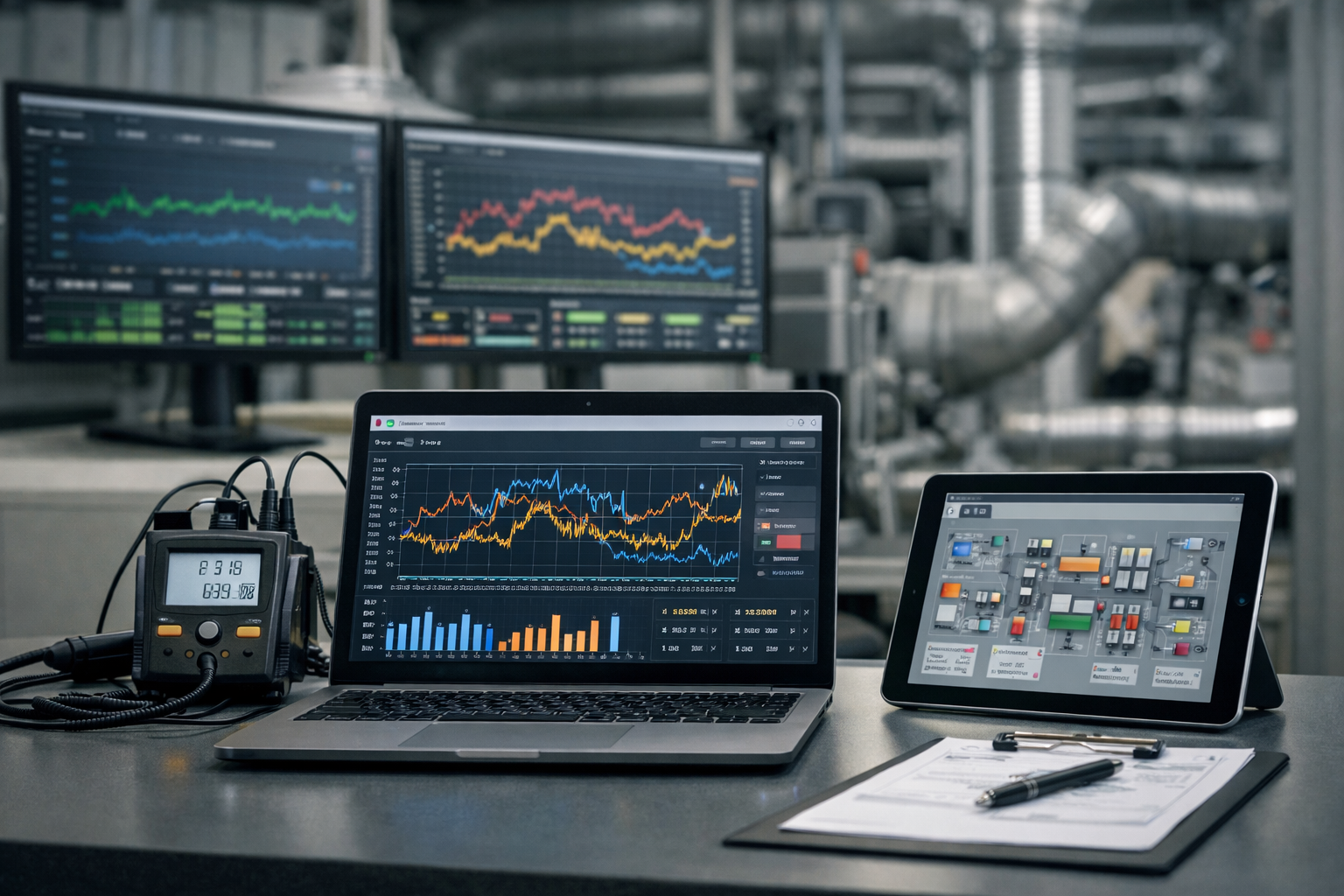
Modern service agreements increasingly rely on logged operating data because patterns, not surprises, precede most HVAC failures. Compressors do not typically fail without warning; they run hotter, draw irregular current, or operate under abnormal suction and discharge conditions for weeks. Airside problems show up as rising static pressure, drifting supply air temperature, and longer runtimes to meet the same load. When a service agreement includes logging, it creates a factual record of what normal looks like for each piece of equipment, at that site, under typical occupancy and weather conditions. That baseline matters because it helps teams separate seasonal variation from true performance drift. It also prevents time-wasting debates during emergencies, such as whether a unit has always struggled or whether conditions changed recently. Logging can come from built-in controller histories, BAS trend points, add-on sensors, or smart thermostats in smaller assets. Still, the purpose is the same: to capture repeatable measurements at consistent intervals. When data becomes part of the agreement, service becomes proactive in a measurable way, and budgets shift from reactive repair cycles to planned corrections that can be scheduled before comfort and reliability suffer.
- Which Points Matter And How They Get Interpreted
The value of trend analysis depends on selecting points that reflect real system health rather than noise. Contractors and facility teams typically focus on temperatures, pressures, runtimes, starts per hour, fan speeds, damper positions, and electrical indicators such as current draw or phase imbalance, where available. The point is not to drown a property team in charts but to connect data to specific failure modes. A rising return temperature split can indicate loss of capacity, while a widening supply temperature swing can suggest unstable control or short cycling. If static pressure climbs over time, filter practices or duct restrictions may evolve even if the building feels acceptable today. Trend analysis also highlights operational issues that a maintenance walk-through may miss, such as simultaneous heating and cooling, poor economizer performance, or VAV system hunting due to sensor placement and tuning. The interpretation is most useful when it is contextual, tied to occupancy schedules and outdoor conditions. In Peoria, for example, trend plots often make it clear when shoulder-season control strategies are driving unnecessary cycling or when economizer operation is not matching the milder outdoor conditions. When the service agreement defines who reviews these trends, how often, and what triggers a field visit, the data moves from passive storage to an active decision tool.
- How Trend Alerts Turn Into Field Actions
A trend report is only as good as the actions it produces. Strong service agreements define thresholds and response steps so that anomalies generate disciplined follow-up rather than panic. If a unit shows increasing starts per hour, the first action may be to check thermostat differentials, staging logic, and minimum run times before assuming a mechanical defect. If the supply air temperature is stable but space temperatures drift, the action may shift toward airflow distribution, damper control, or sensor calibration. If a compressor shows abnormal current patterns, the response may include checking the refrigerant charge, coil condition, and electrical connections, then verifying with a follow-up log period. Trend-driven fieldwork is typically faster because technicians arrive with a short list of hypotheses supported by data, rather than a blank slate. It also improves communication with owners because the reason for a repair is not framed as a vague recommendation but as a visible deviation from baseline. Over time, this feedback loop improves the agreement itself. Thresholds are refined, nuisance alerts are eliminated, and the program focuses on the signals that predict downtime or energy waste. The property team gets fewer surprises, and the contractor can demonstrate value with documented avoided failures and reduced after-hours calls.
- Short Paragraph On Reporting That People Use
Useful reporting is brief, visual, and tied to decisions. A monthly summary should highlight only the top exceptions, the likely cause, and the recommended next step. Trend lines should show before-and-after changes when repairs or tuning are completed. When reporting becomes too dense, it gets ignored, and the agreement reverts to routine visits without insight. Clear reports build trust and keep teams aligned.
- Making Data Useful Without Overcomplicating Operations
Data logging succeeds when it aligns with how buildings are actually managed. That means deciding who owns the review process, how often it happens, and what counts as actionable. Many facility teams benefit from a rhythm where weekly checks focus on exceptions and monthly reviews focus on drift and seasonal tuning. The service provider should also validate sensor accuracy, because trending bad inputs creates false confidence. A temperature sensor off by a few degrees can distort economizer diagnostics, discharge air controls, and comfort assessments. A pressure sensor in a turbulent duct location can make a fan look unstable when it is not. Agreements that include periodic sensor verification protect the integrity of the entire trend program. It is also important to connect trend findings to the maintenance plan. If filter pressure-drop trends indicate premature loading, then filter type, change intervals, or return leakage might need attention. If runtime trends reveal chronic overcooling, then setpoints, schedules, and tenant overrides become part of the solution. The goal is not to treat data as a separate technology project but as a continuous layer of accountability that strengthens everyday operations and makes maintenance decisions easier to defend.
Why Trend-Based Agreements Pay Off Long Term
The strongest argument for data logging and trend analysis is that it changes the timing of decisions. Instead of waiting for a breakdown, teams can act when performance begins to drift, and repairs are smaller, cheaper, and easier to schedule. That protects equipment life because motors, compressors, and controls are not forced to operate under chronic stress. It also protects comfort by correcting issues before they become tenant-facing. For owners, it improves financial predictability by shifting costs from emergency work to planned improvements that can be budgeted and bid. Trend-based agreements also support energy accountability by revealing waste patterns that would otherwise be invisible, such as economizers that never open, simultaneous heating and cooling, or fans running overnight outside of occupancy. The result is a service relationship grounded in evidence. When data is collected consistently, reviewed responsibly, and tied to clear response actions, modern HVAC service agreements become more than maintenance contracts. They become performance management, with numbers that tell the story early enough to matter.